The Hidden Cost of Period Poverty: When Pads Become a Price for Sex

In Kabusa and other outskirt communities across Abuja, the reality of period poverty is raw and painful. It’s more than just not being able to afford pads, it’s a silent crisis that’s pushing many girls into choices no child should ever have to make. When a girl starts her period and has no pad, no support, and no one to talk to, desperation sets in. For many, that desperation has a face, a man willing to “help.”
It often begins innocently. A young girl, maybe 13 or 14, asks a man in her neighborhood or someone she calls “Uncle” for help. “Uncle, I just need money to buy pads,” she says. He gives it to her the first time, and she is grateful. The next month, she asks again. But this time, the help comes with expectations, a touch here, a visit there, a favor in return. Slowly, the line between help and exploitation fades.
Before long, this becomes a pattern. Some girls begin to see it as normal, as part of growing up. Others are introduced by their friends, who tell them, “If you have someone taking care of you, at least you won’t have to beg for pads.” And so, what started as a simple need becomes the first step into a life of transactional relationships — a life where affection is traded for money, and where survival feels like sin.
These girls, barely in their teens, become part of a growing group known in their communities as “sugar girls”, young girls who get involved with older men, not because they want to, but because poverty leaves them little choice. They start chasing after “sugar daddies,” men who promise them comfort, clothes, phones, and money, but who also take away their innocence and leave behind emotional wounds, pregnancies, and infections.
Many of these girls drop out of school soon after. Some are forced into early motherhood; others battle stigma, depression, and disease. It’s a painful cycle, one that starts with something as basic as a pad but ends with a lifetime of loss. In community after community, the pattern repeats: girls missing school every month because they cannot manage their periods; girls too ashamed to talk about it; and girls finding comfort in the wrong arms because of something that should have been freely available.
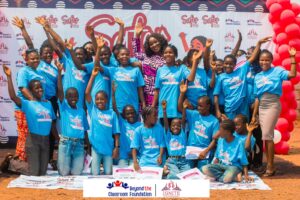
Beyond the Classroom Foundation’s, conversations about period poverty reveal an even deeper problem, silence. Parents often avoid discussing menstruation with their daughters, teachers are uncomfortable, and men don’t see it as their concern. Yet, the same men are the ones these girls turn to when they are most vulnerable.
When we talk to mothers in Kabusa and nearby communities, many express heartbreak. They know what’s happening but feel powerless. “What do you do when your daughter is crying because she has stained her uniform and can’t go to school?” one mother asked. “If someone offers to help, you accept it, even if it comes with shame.”
But it shouldn’t be this way. No girl should have to choose between her dignity and her education. No girl should have to give her body in exchange for something as natural and essential as menstrual protection. Pads are not a luxury, they are a necessity. Period poverty is not just about hygiene; it’s about human rights, education, and safety.
Until communities, schools, and leaders take this issue seriously, by providing menstrual products, breaking the silence around menstruation, and protecting girls from exploitation, the cycle will continue. We will keep losing bright, beautiful dreams to poverty, silence, and predatory men.
Every pad given to a girl is not just hygiene support, it’s dignity restored, education preserved, and hope protected. Because every girl deserves to manage her period safely, stay in school confidently, and grow up free from fear, shame, or exploitation.