Traditional and Community Leaders Unite to Advance Gender‑Based Violence Prevention Across Africa
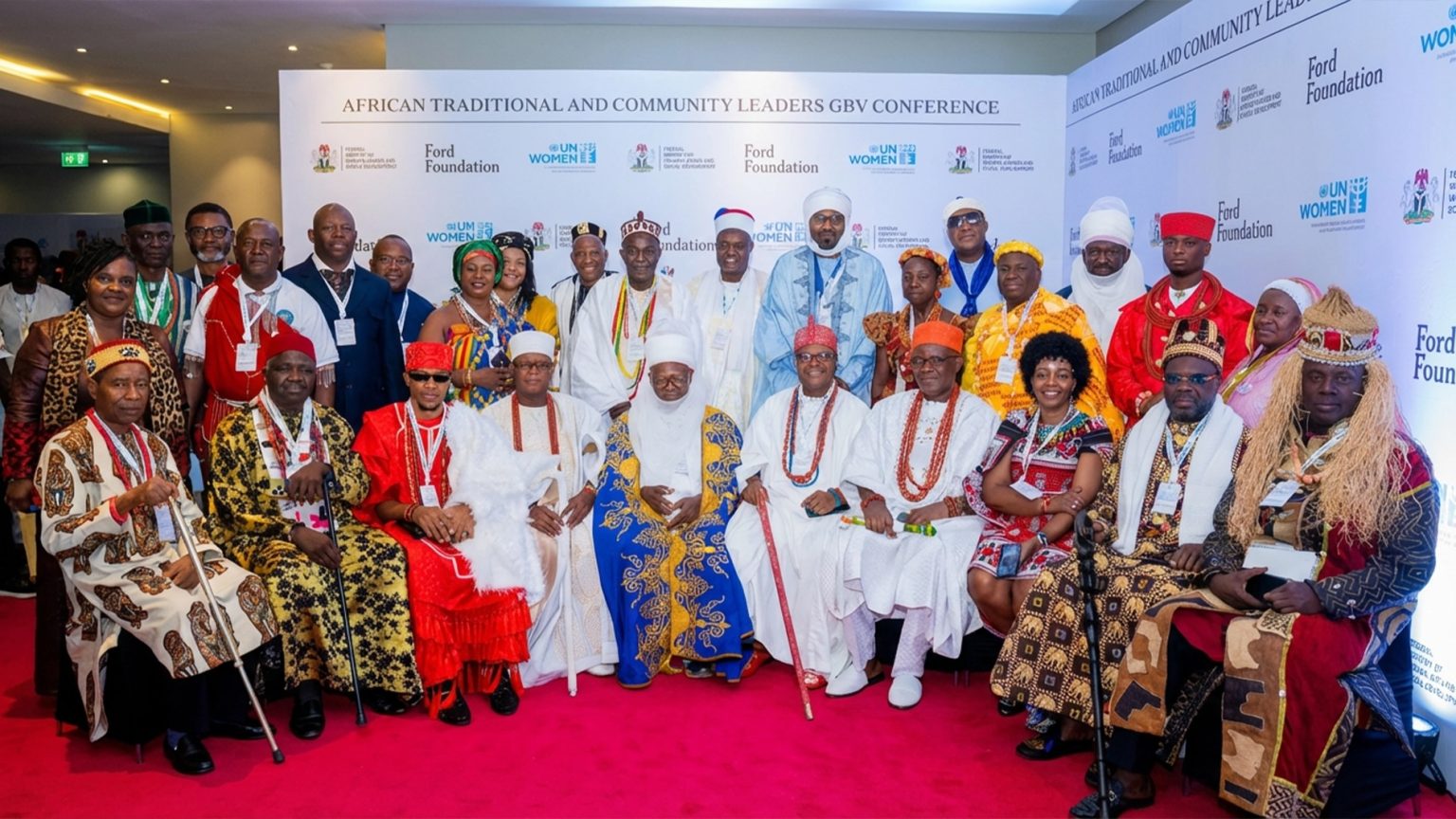
Traditional rulers and community leaders from across the African continent have come together to chart a collective path toward ending gender‑based violence (GBV), emphasising the powerful role of cultural custodianship in transforming harmful social norms and advancing community protection.
The African Traditional and Community Leaders Gender‑Based Violence Conference 2026, organised by the Ford Foundation and UN Women in collaboration with the Federal Ministry of Women Affairs and Social Development, convened in Lagos to explore how culture, long a driver of social behaviour, can become a catalyst for positive change and protection for women and girls.
Gender‑based violence remains one of the most pervasive threats to human dignity, family stability, and national development across Africa. Addressing this crisis requires more than legal reform; it demands deep cultural shifts that challenge harmful traditions and elevate norms of equality, justice, and respect.
Speaking at the conference, representatives of government and civil society reaffirmed that traditional institutions are indispensable partners in ending GBV. Traditional leaders hold moral authority, social legitimacy, and proximity to communities, making them uniquely positioned to influence behaviours and reshape attitudes that have historically tolerated or normalised violence.
In his remarks on behalf of the Lagos State Governor, Prof. Akin Abayomi highlighted that while laws are necessary, they alone cannot transform culture. Sustainable change, he said, happens when governments collaborate with traditional custodians, faith leaders, families, and grassroots institutions to redefine social expectations and protect vulnerable populations.
Ford Foundation leadership underscored the importance of grounding progress in cultural legitimacy, noting that African societies possess immense potential to inspire new, homegrown solutions to long‑standing challenges. UN Women leaders also emphasised the structural roots of abuse and the need to affirm norms and institutions that ensure equality, dignity, and justice for all.
Participants at the conference agreed that culture is not static but evolves through leadership and shared commitment. Traditional and community leaders committed to leveraging their influence to reject harmful practices, promote survivor‑centred support systems, and advance strategies that protect women and girls at every level of society.
The convening marks a pivotal moment in the continental dialogue on GBV prevention, signalling that culture, when harnessed for good, can be a powerful driver of justice, safety, and inclusive development across Africa.
About the Conference
The African Traditional and Community Leaders Gender‑Based Violence Conference 2026 brought together a diverse assembly of cultural custodians, traditional rulers, government representatives, and development partners to strengthen collaboration, share strategies, and reaffirm collective commitments to eradicate gender‑based violence across communities in Africa.