ABIMBOLA VICTORIA OLAWALE: THE KINGDOM WOMAN ACTIVATOR BUILDING WOMEN OF PURPOSE, FAITH, AND IMPACT

Some people are driven by the desire to succeed; others are moved by a deeper conviction to see others discover who they are, recognise what they carry, and become equipped to do something meaningful with it. For Abimbola Victoria Olawale, widely known as Coach B, that conviction sits at the heart of her life’s work.
A woman of faith, wife, mother, coach, teacher, and builder, Coach B has dedicated much of her journey to helping women discover their identity, embrace their purpose, and translate their potential into meaningful action. Known as The Kingdom Woman Activator™, she brings together spiritual formation, personal development, leadership, coaching, and practical capacity-building to help people move beyond inspiration and begin building lives, businesses, ministries, communities, and legacies that reflect their values and convictions.
Her work spans several initiatives, each addressing a different dimension of human development. Through ReviveHER Global, she champions spiritual restoration, discipleship, and a deeper relationship with Jesus Christ. Through Kingdom BuildHERs Network and Coached by Abimbola, she equips women to develop their ideas, strengthen their leadership, and build with intention. EmpowHER Girls focuses on helping younger females develop a strong foundation of identity, character, and purpose, while her family-focused initiatives extend her commitment to marriage, parenting, and generational development.
Yet, beyond the initiatives, platforms, and titles lies a central question that continues to shape her work: what happens when people recognise their potential but lack the clarity, capacity, or support to act on it? For Coach B, discovering purpose is only part of the journey. The other part involves developing the wisdom, discipline, skills, and courage required to steward that purpose well.
Her journey has been shaped by faith, a commitment to intentional living, and a growing understanding of the responsibility that comes with influence. Having started speaking publicly at seventeen, she has continued to explore the relationship between identity, conviction, leadership, and the choices that shape a person’s life. Today, her work reflects a desire not merely to inspire people but to equip them to build, lead, serve, and create impact that extends beyond themselves.
In this conversation with Africa Rising Stories, Coach B reflects on the experiences and convictions behind her work, the lessons she has learned about identity and leadership, the vision connecting her various initiatives, and the legacy she hopes to leave. She also shares what it means to be a Kingdom Woman Activator and why she believes that purpose must move beyond discovery into intentional building.
ARS: Who is Abimbola Victoria Olawale beyond the titles, the platforms, and the work you do? What are the values and experiences that have shaped the woman you are today?
Coach B: Beyond the titles, I am a woman who is deeply committed to God, to the people He has entrusted to me, and to the responsibility of using my life meaningfully. I am a wife, a mother, a woman of faith, a builder, a teacher, and someone who is constantly learning how to become more of the person God has called me to be.
I have always been drawn to the question of what a person does with what has been placed inside them. What do you do with your gifts? What do you do with the opportunities you have been given? What do you do when you recognise that there is something you are responsible for building, but you do not yet have all the answers?
Those questions have shaped the way I approach life and leadership.
One of the things that has shaped me most is that I began paying attention to identity and purpose quite early in life. I started speaking publicly at seventeen, and even as my understanding of purpose developed, my faith remained central to how I approached decisions and the direction of my life.
Looking back over the years, I have come to appreciate how much that foundation preserved me. I cannot claim that I have been spared every difficulty or disappointment, but I recognise that having my faith at the forefront of my decisions helped me avoid choices that could have taken my life in directions contrary to the person I wanted to become. My relationship with God was not simply something I practised on Sundays; it influenced my values, lifestyle, relationships, and major decisions.
That realisation has become a significant part of my life’s work. I began to think about how many women could benefit from learning early to make decisions from a place of conviction rather than pressure, and how many others need help rebuilding their lives around their faith after difficult experiences.
I began speaking on stages at seventeen, and over the years, my journey has taken me through ministry, writing, coaching, entrepreneurship, women’s development, and social impact. My academic background is in Biochemistry, but my life has also taught me that there are dimensions of human development that go beyond what we can measure in a laboratory. People need truth, direction, spiritual grounding, knowledge, and the courage to act on what they know.
I value depth over appearances, substance over recognition, and obedience over the need to be understood by everyone. I believe that influence should come with responsibility. If people listen to you, learn from you, or look to you for direction, you have a responsibility to be intentional about what you are building in them.
I am also very conscious of the fact that I am still becoming. I may lead, teach, write, and coach, but I am also a student of life, of Scripture, of leadership, and of the people and assignments God has placed around me.
Ultimately, I want my life to mean more than the number of platforms I build or the number of people who know my name. I want the work I do to produce people who are stronger in their faith, clearer about their purpose, better equipped to lead, and capable of making a meaningful difference in their own spheres of influence.
ARS: You have dedicated much of your work to helping women discover their identity, embrace their purpose, and build the things they envision. Was there a particular experience in your own life or something you witnessed that made this work personal to you?
Coach B: My commitment to this work comes from a conviction that discovering purpose and fulfilling purpose are two different things.
There is a great deal of emphasis on helping people discover who they are and what they are called to do, and that is important. But I have become equally concerned with what happens after that discovery. What happens when a woman knows she has something to contribute but does not know how to begin? What happens when she has an idea but lacks the confidence, structure, knowledge, or support to develop it? What happens when she has spent years preparing, learning, praying, and dreaming, but the thing she carries remains an idea?
I do not believe that women should have to choose between spiritual depth and practical competence. A woman can be deeply committed to God and still need to learn strategy, leadership, communication, financial stewardship, business development, and execution. In fact, I believe these things become important when we take our responsibilities seriously.
That conviction is reflected in the different expressions of my work. Through ReviveHER Global, I am concerned with the spiritual restoration and formation of women. Through Kingdom BuildHERs Network and Coached by Abimbola, I focus on helping women develop the clarity and capacity to build. Through EmpowHER Girls, I want younger females to begin developing a healthy understanding of identity, character, and purpose before they have spent years trying to recover them.
These are not disconnected interests to me. They address different dimensions of a person’s development.
I want women to know God, understand themselves, recognise what they carry, and develop the capacity to do something meaningful with it. I want them to move beyond admiring the lives of people they consider successful and begin taking responsibility for the work entrusted to them.
For me, women’s empowerment must go beyond inspiration. It must equip women to make decisions, develop their abilities, create opportunities, lead responsibly, and build things that make a difference.
ARS: In your reflections on life, you have written about identity, expectations, approval, and becoming the person God has called you to be. What experiences brought these lessons home to you, and how have they shaped the way you live and lead today?
Coach B: One of the important distinctions I have come to understand is that there is a difference between being known by people and being clear about who you are.
When your life involves public leadership, ministry, speaking, and serving people, there will always be expectations. People will have opinions about what you should do, how you should do it, what you should prioritise, and sometimes even what your life should look like. Some expectations may be reasonable, but not every expectation is an assignment you are meant to carry.
I have learned to pay attention to the difference between responsibility and pressure. Responsibility asks me to be faithful to what I have been entrusted with. Pressure can make me feel that I must prove something, satisfy everyone, or keep doing things simply because people have come to expect them of me.
That distinction matters because it is possible to become so occupied with meeting external expectations that you lose sight of the work that is actually yours to do.
My Christian faith has made identity particularly important to me. I believe that who we are must be established by more than applause, criticism, achievement, or the opinions of other people. When identity is unstable, every new opinion can become a verdict on your worth. But when you have a settled understanding of who you are and what you are responsible for, you can receive feedback without allowing it to define you.
This has also shaped my leadership. I am learning that I do not have to imitate another person’s expression of purpose to fulfil my own. I can learn from others without becoming a copy of them. I can appreciate another woman’s success without treating it as evidence that I am behind. I can recognise that someone else is doing meaningful work without abandoning the particular work I have been called to do.
I also believe that becoming requires honesty. You must be willing to examine your motives, acknowledge where you need to grow, and let go of versions of yourself that no longer reflect your convictions.
For me, the goal is not to become a woman who is immune to other people’s opinions. It is to become a woman whose decisions are not governed by the need for their approval.
One of the most important lessons my own journey has taught me is that the decisions we make can shape the direction of our lives long before we fully understand their consequences.
My relationship with God became an important foundation for how I approached life, relationships, opportunities, and major decisions. Looking back, I recognise that my faith helped preserve me from certain choices that could have led to unnecessary heartbreak and disappointment. It taught me that I did not have to follow every pressure, pursue every opportunity, or live according to every expectation placed on me.
That understanding has shaped how I lead and how I mentor others. I have come to see that a woman can be so occupied with being who everyone expects her to be that she gradually loses touch with who she is becoming. She may be celebrated for her reliability, admired for her sacrifices, or praised for always being available, yet still struggle to determine whether the life she is building reflects her convictions and purpose.
I have learned that becoming who God has called you to be requires the courage to make decisions from conviction rather than the constant need for approval. It means recognising that not every open door is your assignment and not every expectation is your responsibility.
This is also why I believe faith must be more than a part of our Sunday experience. It should influence how we think, the relationships we nurture, the opportunities we pursue, the boundaries we establish, and the lives we build. When identity is rooted in God rather than external validation, it becomes easier to make decisions that are aligned with the person you are called to become.
I am still growing and learning, but one truth remains central to my journey: you cannot build a purposeful life by continually abandoning your convictions to satisfy other people’s expectations.
ARS: Through Coached by Abimbola, you work with people who want to build brands, businesses, ministries, and communities. What have you observed about the gap between women recognising their potential and actually building something with it? What do you believe most often holds them back?
Coach B: I have observed that recognising potential can be an exciting experience, but building requires a different kind of commitment.
A woman may have a clear idea of what she wants to do, a genuine burden for a particular group of people, or a strong desire to build a business or ministry. She may even have spent years praying about it. But when it is time to translate that vision into something people can understand, access, participate in, or benefit from, she may discover that she needs more than passion.
She needs clarity. She needs to understand the problem she is solving, who she is serving, what she is offering, and how she will deliver it. She needs to make decisions, develop skills, create systems, communicate her value, and learn to work consistently even when the initial excitement fades.
I believe one of the biggest gaps is between having a vision and developing the capacity to execute it.
Another challenge is that some women are trying to build too many things at once. They have several ideas, multiple interests, and a genuine desire to make an impact, but they have not yet established what should come first. Without prioritisation, even gifted people can spend years being busy without making meaningful progress on their most important assignment.
There is also the issue of visibility. Some women are doing valuable work but have not learned how to communicate it clearly. They assume that because their work is good, people will automatically discover it. But people cannot respond to what they do not understand or cannot find. Learning to communicate your work is not necessarily vanity; it can be part of serving the people who need what you have to offer.
Through Coached by Abimbola, my focus is to help women move from vision to implementation. I want them to gain clarity about what they are building, develop a strategy, take action, establish a foundation, and create impact.
I am not interested in helping women collect ideas and remain excited about possibilities. I want them to develop the capacity to make those possibilities tangible.
A vision is not fulfilled simply because it has been received. It must be stewarded, developed, and worked on. That is where I believe intentional coaching and strategic support can make a significant difference.
ARS: Kingdom BuildHERs Network and EmpowHER Girls both focus on empowering females, but at different stages of life. What inspired each initiative, and what do you believe women and girls need to learn early enough to change the direction of their lives?
Coach B: Although Kingdom BuildHERs Network and EmpowHER Girls serve different age groups and stages of development, they are connected by a conviction that females should be equipped to live with intention and contribute meaningfully to the world around them.
Kingdom BuildHERs Network grew from an evolving vision for a community where women could be developed, supported, and equipped to build. What began as Arise Network in 2024 and later evolved through HER RISE has developed into a broader network with a strong emphasis on building. I wanted the focus to go beyond celebrating women’s potential to equipping women for the work that potential requires.
The word BuildHER captures something important to me. We are not only building women; we are building women who can build. Women who can develop ideas, lead teams, establish institutions, create opportunities, strengthen families, serve communities, and leave something meaningful behind.
EmpowHER Girls addresses the earlier stages of that journey. Adolescence and young adulthood are formative periods. The beliefs a girl develops about herself, the relationships she accepts, the decisions she makes, and the way she interprets her abilities can influence the direction of her life for years to come.
I want girls to understand that their worth is not determined by appearance, popularity, relationship status, or how much attention they receive. I want them to develop character, discernment, confidence, responsibility, and the ability to make thoughtful decisions. I want them to understand that they can be compassionate without being easily manipulated, confident without being arrogant, and ambitious without losing their values.
I also want them to recognise that their education, gifts, ideas, and opportunities are things to steward.
For women, the conversation often shifts from identity to responsibility. It is not enough to know that you are capable. You must also be willing to learn, make difficult decisions, develop discipline, and take ownership of your growth.
For girls, we want to help establish those foundations early. For women, we want to strengthen them and translate them into purposeful action.
The long-term vision is that girls grow into women who are not merely trying to find themselves but are equipped to make thoughtful decisions, lead with conviction, and build lives that reflect their values and purpose.
ARS: What inspired you to establish ReviveHER Global, and what does restoration mean to you in the lives of the women you hope to reach? Was there a particular need or experience that made you feel this initiative was necessary?
Coach B: ReviveHER Global is both one of the clearest expressions of my heart and one of the earliest initiatives I began developing, in 2018. From the beginning, I carried a deep passion to see women put their faith in Jesus Christ at the forefront of their lives—not as something reserved for Sundays, but as the foundation that informs their choices, relationships, lifestyles, and everyday decisions.
I wanted women to understand that God does not only want to restore people after life has broken them down; He also wants to preserve them. We often hear powerful stories of people who lost their way and found their way back to God. Those stories matter, but I have also been deeply concerned about helping people build lives around God’s wisdom before they find themselves in situations that require restoration.
I believe it is possible to start early, learn God’s ways, make decisions aligned with His purposes, and avoid certain destructive paths altogether. This conviction connects ReviveHER Global with my passion for EmpowHER Girls: I want women to experience restoration, but I also want girls to develop foundations that help preserve them.
Another burden that shaped ReviveHER Global was my desire to study the women of Scripture more deeply. I did not want our understanding of biblical womanhood to revolve only around the familiar stories of Deborah, Esther, and Mary. I wanted to examine the lives of women across Scripture, including women whose decisions offer difficult but important lessons.
What can we learn from Leah’s experiences? What do the daughters of Zelophehad teach us about courage and speaking up? What can we learn from Jael’s decisive action, and what warnings can we draw from the choices of Delilah and Jezebel? I wanted us to examine both the examples worth emulating and the ones that reveal the consequences of destructive choices. These studies help us understand the complexities of human decisions and the wisdom Scripture offers for our own lives.
At its heart, ReviveHER Global is a call for women to return to Jesus, deepen their relationship with Him, become spiritually awakened, and live with renewed purpose. Through prayer, Bible study, discipleship, and community, we create opportunities for women to be restored and strengthened in their faith.
For me, revival is not merely an emotional experience. It should change how a woman lives when the gathering is over. Her faith should influence her decisions, shape her character, direct her priorities, and inform the way she treats people.
I want to see women who are not only revived in a moment but rooted in Christ for a lifetime—women who understand that God desires both their restoration and their preservation.
Restoration, to me, is not simply helping a woman feel better after a difficult season. It includes helping her return to truth, rebuild her spiritual foundations, confront what has weakened her faith, and develop a more consistent relationship with God.
It is also important to me that restoration is not treated as the end of the journey. We want women to be rooted, strengthened, and equipped to live out their faith. A woman who has been restored should have the opportunity to grow in spiritual maturity, develop discernment, serve others, and become a source of strength within her own sphere of influence.
Through prayer gatherings, Bible study, reading plans, discipleship, and other resources, ReviveHER Global creates opportunities for women to engage with God and grow alongside others who share that desire.
I also see the word Global as significant. The need for spiritual formation is not limited by nationality, race, or geography. Although I am Nigerian, the message and work of ReviveHER Global are intended to reach women across cultures and nations.
My desire is not merely to gather women around activities. It is to see women develop a deeper love for Jesus, become established in the truth of God’s Word, and live from a place of spiritual conviction rather than simply responding to the demands of everyday life.
That is the heart of restoration for me: not just returning to where you were, but becoming more deeply rooted in the life God calls you to live.
ARS: You lead several initiatives, from coaching and women’s development to marriage, parenting, and children’s work. What is the bigger vision connecting them all, and how do you decide where to focus your time and energy?
Coach B: The initiatives may address different needs, but I do not see them as unrelated projects. They are different expressions of a broader commitment to spiritual formation, purposeful development, and generational impact.
ReviveHER Global addresses spiritual restoration and discipleship. Kingdom BuildHERs Network and Coached by Abimbola address women’s development, leadership, and the practical work of building. EmpowHER Girls focuses on preparing younger females to make informed, purposeful decisions. Marital Bliss Academy addresses relationships and marriage, while Kingdom Parents, Mothers with Mandate, and Kids Love Truth focus on parenting, family development, and children’s spiritual formation.
When I consider these initiatives together, I see a connected picture of human development. People need to be grounded spiritually, strengthened personally, equipped practically, and supported in the relationships and communities in which they live.
I am particularly interested in the relationship between personal transformation and what people build around them. A woman who grows in wisdom and character can influence her home. A woman who develops leadership capacity can strengthen an organisation. A woman who receives the right guidance early enough can make decisions that change the direction of her life. And a person who has been equipped can, in turn, equip others.
That is the kind of multiplying impact I want to create.
As for focus, I believe that having several assignments does not mean everything must receive equal attention at every moment. Different initiatives have different seasons, needs, and priorities. The challenge is to recognise what requires attention now, what can be developed through a team, what needs a stronger structure, and what should wait.
I am learning the importance of distinguishing between the size of a vision and the capacity available to execute it at a particular time. A meaningful assignment deserves more than enthusiasm; it deserves planning, structure, and responsible stewardship.
I also believe that not every opportunity should automatically become a new project. The question must be whether it genuinely advances the mission, addresses a real need, and can be stewarded well.
My bigger vision is to build work that is both meaningful and sustainable—work that serves people effectively, develops other leaders, and continues to produce value beyond my personal involvement.
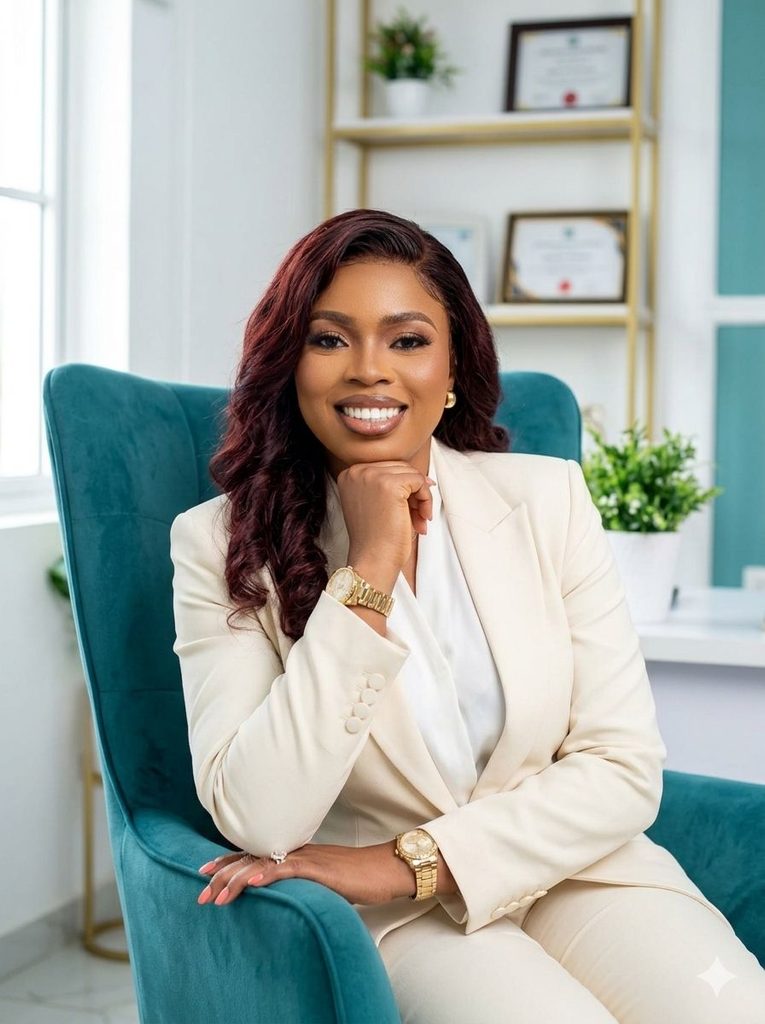
ARS: You serve in ministry alongside your husband, Rev. Timothy Oluwabamise Olawale, and your work also includes marriage and parenting. How have your own experiences of marriage and family life shaped your understanding of partnership, growth, and helping other families thrive?
Coach B: Marriage and family life have made the conversations around leadership, partnership, responsibility, and growth very real to me.
My husband, Rev’d Tim, and I serve together in ministry, and we are also raising our children, Zion and Zoe. That means our lives are not divided into neat categories where ministry happens in one place, family happens somewhere else, and personal growth is something we address when everything else is finished. These dimensions of life meet one another every day.
One thing I believe strongly is that partnership requires more than sharing a name, a home, or a vision. It requires learning how to work together, communicate, recognise each other’s responsibilities, and make decisions with an understanding that you are building something together.
I also believe that a healthy partnership makes room for the growth of both people. Marriage should not require one person to disappear so that the other can flourish. At the same time, individual ambitions must be handled with an awareness of shared responsibilities and the well-being of the family.
Our work in ministry has also reinforced my understanding that public service and private responsibility must be held together. It is possible to be committed to helping other people and still need to be intentional about the people closest to you. The family cannot simply be assumed to be fine because the work outside the home is going well.
Parenting has its own lessons. Children are not only listening to what we tell them; they are observing how we live, how we respond to pressure, how we treat people, how we handle disagreements, and what we prioritise. That makes parenting a responsibility that requires ongoing self-examination.
These convictions influence my work through Marital Bliss Academy and our family-focused initiatives. I believe families need more than general encouragement to love one another. They need practical wisdom, intentional communication, healthy patterns, and a willingness to keep learning.
I do not approach marriage and parenting as subjects in which a person simply arrives at a point of complete mastery. They are areas in which we must continue to grow in understanding, responsibility, patience, and wisdom.
My desire is to help families build relationships that are not only maintained but intentionally nurtured, so that the home becomes a place where people can grow, contribute, and flourish.
ARS: Of all the work you have done, what is one story or transformation that has stayed with you and reminded you why this work matters? What did that experience teach you about the change you are trying to create?
Coach B: I once had a conversation with a woman who was carrying a vision she desperately wanted to bring to life, but she had become overwhelmed by everything she believed it would take to make it happen. She knew she had something valuable to offer, yet she kept questioning whether she was ready. There were so many things she felt she needed to figure out before taking the first step: how to communicate her value, how to reach the right people, and how to turn what she knew into something that could make a real difference.
As we talked, I began to help her separate the vision itself from the weight of everything she thought she needed to accomplish at once. We looked at what she wanted to build, the people she wanted to serve, the value she could offer, and the practical steps that would move her forward. Instead of looking at the entire journey as one overwhelming task, she could begin to see the next steps more clearly.
What mattered was the shift in perspective: she did not have to know everything before she could begin. She needed to be willing to learn, develop the necessary skills, and take responsibility for the part of the vision she could act on now.
Moments like this remind me that sometimes, what stands between a woman and progress is not the absence of a vision but the absence of a clear pathway for pursuing it. When we help women gain that clarity and connect it to intentional action, we give them a stronger foundation for building with purpose.
This is why I do what I do. I want women to move beyond seeing their potential as a possibility and become equipped to translate it into meaningful work, tangible results, and lasting impact.
ARS: The Kingdom Woman Activator is a distinctive name that has become associated with you. How did that name come about? Is there a story, experience, or moment that led you to embrace it, and what does being a Kingdom Woman Activator mean to you?
Coach B: The name The Kingdom Woman Activator™ grew out of something I experienced through a masterclass I organised called HERctivate.
The response to that masterclass was particularly memorable. After the session, people sent feedback describing how activated and stirred up they felt. Some spoke about finally feeling ready to begin something they had been postponing; others described the session as the push they needed to get their vision moving.
What stayed with me was the language they kept using: I’m activated. I’m ready to start. I’m going to kick-start this vision.
It made me reflect on the kind of impact I wanted my work to have. I did not simply want to teach women about purpose or encourage them to believe in their potential. I wanted to help them move from knowing to doing—from recognising what they carried to taking responsibility for developing and expressing it.
At the time, much of my work centred on Kingdom women: women who wanted to honour God with their lives and build in alignment with their faith. I am a Kingdom woman myself, so this was not simply an audience I had selected; it was a community and a conviction I personally identified with.
The idea of being an activator captured that burden. It described my desire to help women gain clarity, recognise their capacity, and take meaningful action on the assignments they believe God has entrusted to them.
That is how the identity of The Kingdom Woman Activator took shape.
Today, although women remain central to much of my work, I am also increasingly receiving men who want mentorship and guidance. The broader principle of helping people move from potential to purposeful action applies beyond one group.
Nevertheless, the title remains deeply connected to my work with Kingdom women. I want women to understand that faith and action belong together. We can pray about a vision, but we must also develop the wisdom, discipline, skills, and courage required to build it.
For me, being The Kingdom Woman Activator™ means helping women become grounded in God, clear about their purpose, and equipped to act on what they have been entrusted with. It is about moving beyond inspiration to intentional building—and seeing that building produce meaningful impact.
ARS: When you think about the legacy you want to leave, what do you hope will continue to exist and make a difference long after you are no longer leading it? And beyond the work people see publicly, what is Abimbola still learning or hoping to become?
Coach B: When I think about legacy, I think beyond the things that carry my name.
I want to build institutions, communities, resources, and systems that can continue to serve people beyond my direct involvement. I want the work to develop other leaders, not simply gather people around one leader. I want women who have been equipped to become equipped leaders themselves, building organisations, raising families, mentoring others, and creating opportunities for people who may never meet me personally.
Through ReviveHER Global, I want to see women develop deeper relationships with Jesus Christ and become grounded in their faith. Through Kingdom BuildHERs Network and Coached by Abimbola, I want to see women build meaningful things with the gifts, ideas, and opportunities entrusted to them. Through EmpowHER Girls and our family-focused initiatives, I want to contribute to a generation that has a stronger foundation for making decisions, leading, relating, and living purposefully.
I want the impact to multiply. If a woman is strengthened through something we build and then uses that strength to transform her home, lead her organisation, mentor another woman, or serve her community, the work has travelled further than I could have taken it alone.
I also want my legacy to be measured by integrity. It matters to me that the work is not only visible but that it is built on convictions that remain meaningful when the attention moves elsewhere. Recognition is valuable, but I do not want recognition to become the reason for building.
Beyond the public work, I am still learning how to steward growth responsibly. I want to keep growing in wisdom, spiritual depth, leadership, and the ability to build sustainable structures around the vision I carry. I want to become better at developing people, delegating responsibility, creating room for other leaders to flourish, and ensuring that the work is not limited by my personal capacity.
I am also a wife and a mother, and I want the growth people see in my public life to be matched by intentionality in my private life. I do not want to become so occupied with helping the world that I neglect the people and responsibilities closest to me.
There is still so much to learn, build, refine, and become. I am not approaching my life as though I have arrived at the final expression of everything I am called to do.
Ultimately, I hope that what continues after me is not simply a collection of successful platforms. I hope it is a body of work that has helped people become more grounded in God, more responsible with their gifts, more capable of building, and more intentional about the legacy they are creating.
If the work continues to equip people to equip others, if the women we serve go on to build things that bless their own generations, and if the principles behind the work remain useful long after my name is no longer at the centre of the conversation, then I will know that we built something that mattered.