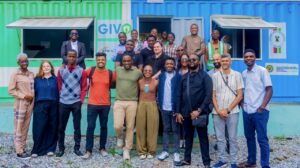
Aramide Kayode: Building a Different Future for Children Through Education

Aramide Kayode is an educator who believes that a child’s future should never be limited by the circumstances of their birth. Through her work, she is challenging conventional approaches to education and creating opportunities for children from underserved communities to become not just academically equipped, but confident thinkers, problem-solvers and creators of change.
As the founder of Talent Mine Academy in Ota, Ogun State, she is building an educational model that combines academic learning with entrepreneurship, vocational training, leadership and community engagement. Her students are encouraged to look beyond textbooks, identify problems around them and develop practical solutions. Some are already running businesses of their own, while others are leading initiatives addressing challenges in their communities.
But how does a young woman arrive at a vision like this? What makes someone look at the education system, recognise what is missing and decide not just to complain about it, but to build something different?
As I began to read more about Aramide, her work and the school she is building, I found myself looking beyond the achievements. I wanted to understand the person behind the work. What had shaped her thinking? What experiences had brought her to this point? And was there something connecting all these different things she was doing?
The more I looked, the more I began to see a pattern. Aramide did not simply wake up one day and decide to build a school. At 19, she was already paying attention to children who were being left out of education. Before there was a campus, a team of teachers, an admission process or an academy with an ambitious educational model, there were five children whose parents could not afford the ₦1,200 required to send them to school.
She had been walking around her community when she encountered the children outside during school hours. Curious, she asked why they were not in school. Their answer was simple: their parents could not afford the fees.
Now, think about that for a moment. These were children who wanted to go to school but could not because their parents could not afford a relatively small amount of money. It would have been easy to see this as one of those unfortunate realities of living in an unequal society. But Aramide saw something she could respond to. She started a Saturday literacy programme for the children.
The lessons took place in a borrowed classroom. The floor had potholes, and there was little furniture. Sometimes, the children had to sit or lie on the floor to learn. There was nothing particularly impressive about the setting. No beautiful classrooms, no elaborate learning resources, no grand plans for a school. Just five children and a young woman who had decided to teach them.
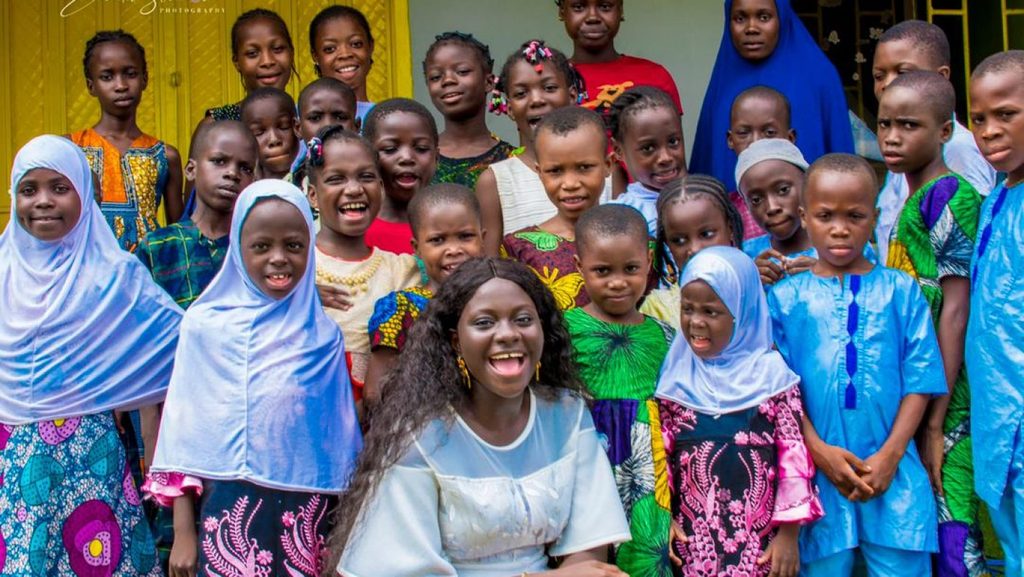
I find this beginning quite revealing. Aramide did not wait until she had the resources to build the school she imagined. She started with what she had and with the children who needed her. And perhaps this is one of the first things to notice about her: she seems to have a way of looking at what is possible even when the circumstances are far from ideal.
The programme grew slowly. The children began to make progress, and what had started as a weekly lesson became a responsibility she could no longer imagine walking away from. That Saturday class eventually grew into Talent Mine Academy.
But I wanted to understand where this commitment came from. Why education? Why was this the path she was willing to pursue when other options were available?
In 2018, Aramide graduated from Covenant University with a First Class degree in Economics. On paper, she had the academic record to pursue a career in finance. It was a respectable path, with opportunities that many graduates would readily embrace. Yet she was drawn towards teaching.
It was not the obvious choice, particularly in a society where teaching is often poorly paid and undervalued. Her father gave her six months to prove that she could make something meaningful out of her decision.
She joined Teach For Nigeria and began teaching in an underserved community. And then came an experience that would make the decision even more real.
On her first day as a teacher, she walked into a Primary 2 classroom of 74 children, aged between six and 16. About 90 per cent could not read at their expected grade level.
Imagine that classroom for a moment. Children of different ages, sitting together, many struggling with a skill that should have been established years earlier. What do you do with that? Where do you even begin?
For a moment, Aramide thought about the investment banking opportunity she had turned down. Then she looked at the children in front of her and chose to stay.
I think this moment is worth sitting with because it tells us something about the kind of encounter that can change how a person sees a problem. Before that day, education inequality may have been something she understood intellectually. Now, she was standing in front of it. It had faces, names and children waiting for someone to teach them.
And the more she taught, the more she understood that getting children into school was only one part of the problem. They also needed an environment where they could learn, feel accepted and discover what they were capable of becoming.
Around this time, another important relationship was taking shape.
Aramide met Oluwaseun Kayode through Teach For Nigeria in 2018. He was also working in education after studying Accounting, and was developing Schoolinka, a social enterprise focused on teacher development. Like Aramide, he had turned away from a more conventional career path to work on the challenges facing education in Nigeria.
Their friendship grew out of conversations about their backgrounds and their shared interest in addressing educational inequality. They eventually married on June 12, 2021, when Aramide was 21.
Now, here is another part of her story that I found interesting. Aramide was young when she got married, but she has described being deliberate about preparing for marriage. She sought mentorship, read about marriage and paid attention to people whose family lives she admired. She had a sense of the kind of home she wanted to build and the person she wanted to build it with.
As I looked at this alongside her professional decisions, I began to notice a connection. The woman who had thought carefully about the kind of work she wanted to do also seemed to think carefully about the kind of life she wanted to build. Her choice of a partner was not disconnected from her convictions. Oluwaseun shared her interest in education, understood the demands of the work and had his own commitment to improving the sector.
It is one thing to find someone you love. It is another to find someone with whom you can share the values and responsibilities that shape the life you want to build.
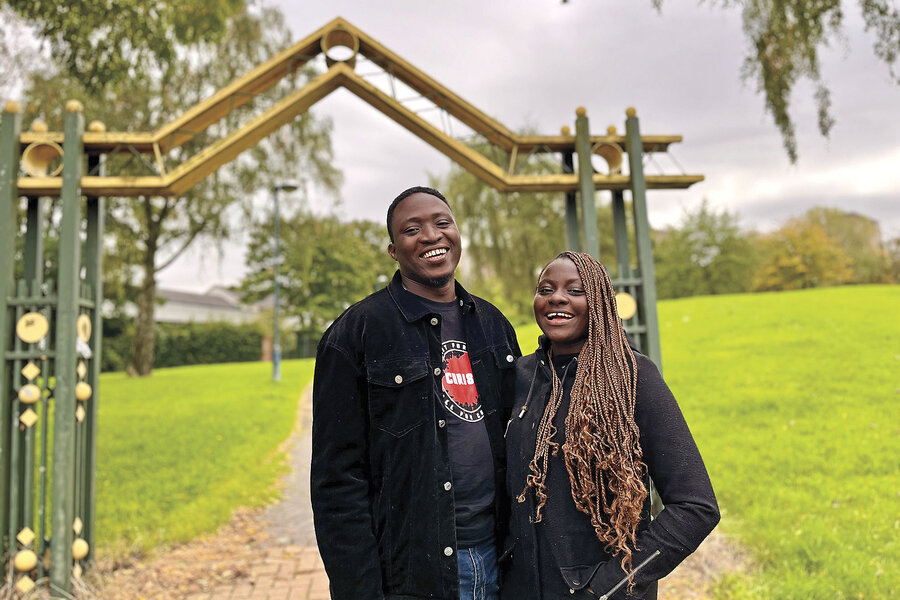
Their partnership has been part of this journey. When Aramide gained admission to Harvard, Oluwaseun reviewed her application essay and celebrated with her when the offer came. He was there as they began establishing their free school, acquired their first property for the school and navigated pregnancy and the arrival of their children.
They are not simply a married couple with separate professional interests. They are two people whose lives and work have grown around a shared commitment to education.
Aramide is also a mother of two children. She has spoken about balancing motherhood, marriage and leadership, and the importance of having a husband who sees caring for their children and home as a shared responsibility.
I find this particularly worth mentioning because sometimes, when we tell the stories of women building organisations, we make it sound as though their professional lives exist somewhere outside the rest of their lives. But that is rarely the reality. There are children to raise, a home to care for, a marriage to nurture, decisions to make and responsibilities that do not pause simply because there is an important meeting or a school to build.
Aramide is navigating these different responsibilities while continuing to build. And from what she has shared about her family, one thing that stands out is the importance she places on partnership and shared responsibility. She is not just building an organisation; she is also intentional about the home and family she is building alongside it.
Meanwhile, her experiences as an educator were continuing to shape what she wanted Talent Mine to become.
When the COVID-19 pandemic disrupted her Saturday programme, Aramide and some friends raised funds to place the children in private schools. It seemed like a good solution. If the children could no longer learn in the borrowed classroom, perhaps a place in an established school would give them a better opportunity.
But the experience revealed something she had not fully considered.
One of the children was invited to an after-school coding class alongside children from more privileged backgrounds. Instead of feeling excited, the child became withdrawn. The other children’s accents and backgrounds made her feel that she did not belong.
There were other concerns, too. Some children reported being unfairly treated in their new school environments.
Now, this is where the story becomes even more interesting. Aramide had tried to solve one problem: children could not afford school, so she helped them get into school. But the solution exposed another problem. What happens when a child finally gets into a classroom but still feels that the classroom was not made for someone like them?
A child could have a school uniform, books and a seat in a classroom and still feel excluded. Being admitted was not the same as being welcomed. Having access was not the same as having the support needed to thrive.
For Aramide, this was more than an unfortunate experience. It challenged the idea that getting a child into any available school was enough. She began to see that the environment itself mattered: how children were treated, whether they felt accepted, whether they had the confidence to participate and whether their backgrounds were seen as something to accommodate rather than something to look down on.
This helped shape the thinking behind Talent Mine Academy. Aramide wanted to create a place where children from low-income communities would not simply be admitted, but would feel safe, supported and capable of participating fully.
Talent Mine became a school in its own right in 2023, offering tuition-free education to children from low-income families. Its approach goes beyond conventional classroom instruction. Students learn through projects that connect academic concepts to problems they can identify in their communities. They also have opportunities to develop life skills, explore vocational interests and learn about entrepreneurship.
The idea is not just to help children pass examinations. It is to help them understand what they can do with the knowledge and skills they acquire.
And this is where I began to see another connection. Aramide does not seem interested in raising children who will simply wait for someone to provide solutions to their problems. She wants them to recognise that they have ideas, abilities and something to contribute. She wants them to see themselves as people who can participate in shaping the world around them.
Consider a child who makes a beaded bag in an entrepreneurship class. The bag is displayed at an exhibition, and someone offers to buy it for ₦60,000. Think about what that moment might mean to the child. Something made with their own hands has attracted a customer. Someone is willing to pay for it. A skill they are developing in school has become something they can use to create value.
It is not just about the money. It is about the discovery that they can make something, that their ideas have value and that they have abilities worth developing.
That is the kind of experience Aramide wants children to have. She wants them to understand that they are not merely recipients of help. They can create things, solve problems, earn an income and contribute to their communities.
At Talent Mine, students are encouraged to identify challenges around them and think about what they can do to address them. Their projects have engaged with issues such as hunger, poverty, climate change and education inequality. Some students are already running businesses, while others are developing practical skills through training in areas such as fashion design, bead making, crochet and product design.
Her work also reaches beyond the academy. Through foundational literacy interventions in public schools, she is working to address learning gaps among children who may not have access to the kind of environment she is building at Talent Mine.
When I consider these different activities, I don’t see disconnected projects. I see different responses to a problem she has spent years trying to understand. The literacy interventions help children who are struggling with the basics. Talent Mine provides an environment where they can develop further. The entrepreneurship and community projects give them opportunities to apply what they know.
It is the same concern expressed in different ways: children should have the opportunity to learn, discover their abilities and do something meaningful with them.
Aramide’s own education has continued alongside this work. After graduating from Covenant University, she earned a Master of Education from the Harvard Graduate School of Education, graduating with Distinction. She has also become a voice in conversations about the future of African education, using platforms such as TEDx to challenge conventional thinking about how children should be educated.
One of the questions running through her work is whether African education can prepare children to compete globally without disconnecting them from their identities and the realities of their communities. For her, education should not simply produce children who can repeat what they have been taught. It should help them understand their world and develop the ability to improve it.
When you consider the children she is raising at Talent Mine, this position makes sense. She wants them to have the knowledge and skills to compete beyond their immediate environment, but she also wants them to understand where they come from and recognise that their communities are places where they can contribute. They do not have to disconnect from their identity to become successful.
In September 2026, she stood at the United Nations Headquarters in Geneva to present the work of Talent Mine Academy. Students’ products from the school’s entrepreneurship programme were also exhibited, and they sold out.
It was a remarkable moment. But there were seven years of work behind those two days. Seven years since a young woman began teaching children in a borrowed classroom. Seven years of showing up, finding resources, learning, adjusting and building something that did not exist before.
And now, the challenge is growing.
Three hundred and sixty families applied for admission to Talent Mine, but the school could only admit 150 children. Among those who could not be accommodated was a nine-year-old girl whose mother earned less than ₦30,000 a month. The child had completed the interviews and home visits and qualified for admission. But there was no classroom available for her.
Think about that. A child has gone through the process, qualified for a place and still cannot be admitted because there is no space. For a school established to create opportunities for children whose families cannot afford education, this is a difficult reality.
For Aramide, the demand is growing, but the capacity has to grow with it. The academy is developing its permanent campus in Ota to create room for more children. The intention is not simply to expand the number of admissions, but to build an institution capable of sustaining quality education as it grows.
This is also changing the kind of work Aramide has to do. The young woman who once taught five children in a borrowed classroom is now thinking about child-protection policies, operational systems, staff development, financial structures and institutional sustainability.
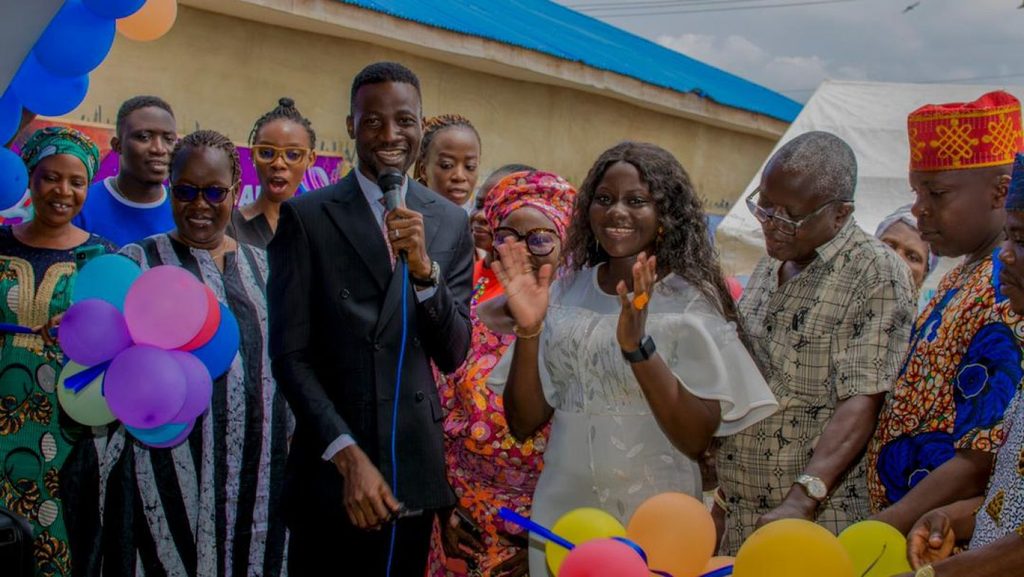
She wants Talent Mine to outlive her. That means building something that does not depend entirely on her energy, presence or personal involvement. It means creating a school with the structures and people needed to carry the vision forward.
And perhaps this is where all the different parts of her story come together.
Think about it. The young woman who noticed five children outside school and decided to teach them is now creating an institution where children can learn and discover their abilities. The teacher who saw that being admitted into a school did not guarantee belonging went on to build a school where the learning environment matters. The woman who values shared responsibility in her family is also thinking about how to build an organisation that does not depend on one person to function.
Even her approach to education reflects this concern for what happens beyond the immediate moment. She is not satisfied with helping a child read today if that child is not also developing the confidence and skills to navigate tomorrow.
Looking at Aramide’s life, I see a woman who seems to be deliberate about what she builds and who she builds with. Her choices are not simply a collection of unrelated decisions. There is a recurring interest in purpose, shared values, responsibility and creating environments where people can flourish.
I think that is what makes her story particularly interesting. We often celebrate people for the things they build, but sometimes the more revealing question is what their choices tell us about the person doing the building.
With Aramide, the school is an important part of the story, but it is not the whole story. There is also the young graduate who chose a less conventional path, the young woman who began teaching five children with very little, the wife who is building a partnership around shared convictions, the mother navigating the demands of family and leadership, and the educator who wants children to see possibilities beyond their present circumstances.
These are not separate versions of Aramide. They are different expressions of the same person.
Seven years ago, the work began with five children in a borrowed classroom. Today, it has grown into a school, a learning model and a platform for children to discover what they are capable of becoming. The journey has taken Aramide from teaching on a pothole-filled floor to presenting her work on an international stage. Yet the thinking behind the work has remained remarkably consistent.
She sees people beyond their present circumstances. She pays attention to what is missing, considers what could be different and sets about building the conditions to make that difference possible.
And perhaps that is the most important thing I discovered while looking more closely at Aramide Kayode. She is not just building a school for children. She is building an environment in which children can begin to see themselves differently, discover what they are capable of and imagine a future that is not dictated by where they started.
The five children in that borrowed classroom were the beginning. The work is much bigger now, but the reason for starting has not changed.