Victoria Mwaura Is Using AI to Make Independence More Possible for Visually Impaired Africans
]For Victoria Mwaura, Artificial Intelligence is not simply about building the next impressive technology. It is about solving a very human problem: helping people who are visually impaired navigate the world with greater independence.
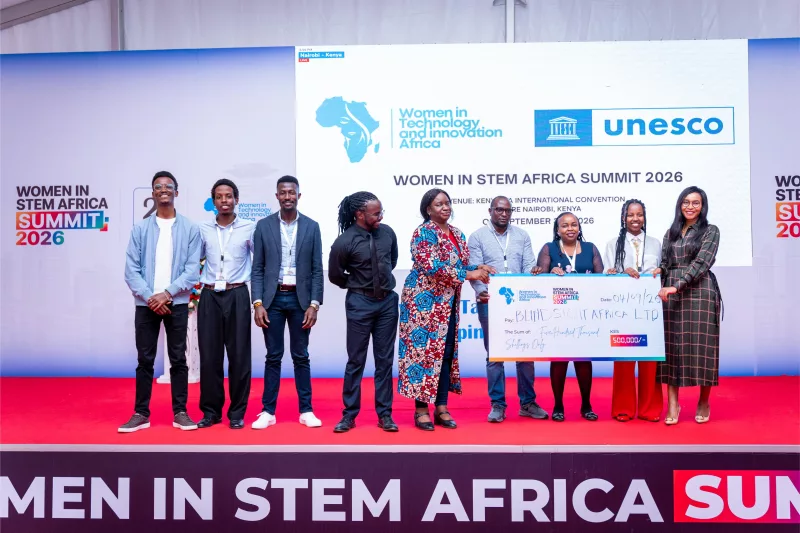
Mwaura, founder of Provision Sight Africa, has emerged as one of the innovators drawing attention to the potential of AI to address everyday challenges across the continent after her company won the Investor Pitch Arena at the Women in STEM Africa Summit 2026 in Nairobi.
Provision Sight Africa received KES 500,000 in seed capital after emerging as the overall winner of the pitch competition, which brought nine finalists before investors, venture capitalists, industry leaders and potential partners.
The company, also known as Blindsight Africa Limited, is developing AI-powered assistive technology designed to provide smart navigation solutions for visually impaired people in Kenya and across East Africa.
For Mwaura, the recognition represents more than a competition victory.
“Winning the Investor Pitch Arena is a powerful validation of the work we are doing to use AI to create greater independence and inclusion for visually impaired people,” she said.
The prize money will support the company’s efforts to strengthen its technology and expand the number of people it can serve across the region.
The work of Provision Sight Africa reflects a broader shift taking place within Africa’s technology ecosystem.
As Artificial Intelligence becomes more accessible, African innovators are increasingly looking at how the technology can be applied to challenges that affect people in their everyday lives — from healthcare and education to accessibility, agriculture and financial inclusion.
For people living with visual impairment, navigation can present significant barriers to education, employment, mobility and participation in society.
Mwaura’s approach is to use AI as a tool for reducing some of those barriers.
Rather than treating accessibility as an afterthought, Provision Sight Africa is placing it at the centre of its technology development.
The company’s ambition is regional: to develop solutions that can serve visually impaired users not only in Kenya but across East Africa.
That focus is important because technological solutions designed for African users need to account for the realities of African environments, communities and infrastructure.
Mwaura’s recognition came at the conclusion of the Women in STEM Africa Summit 2026, organised by Women in Technology and Innovation Africa (WITIA) in partnership with UNESCO.
Held in Nairobi under the theme “Discovering Talent. Driving Innovation. Shaping Africa’s Future,” the summit brought together policymakers, researchers, entrepreneurs, investors, technology professionals and development partners to examine the continent’s innovation ecosystem.
The summit’s pitch competition was designed to address one of the persistent challenges facing African innovators: the gap between having a promising idea and having the resources needed to turn that idea into a viable, scalable enterprise.
WITIA Programmes Manager Wesa Sitati said Africa has no shortage of talent or ideas, but needs stronger connections between innovators and the capital, markets, mentorship and partnerships required to grow.
That challenge is particularly important for women innovators, who continue to face barriers to access to capital, networks and opportunities within technology and entrepreneurship.
WITIA Founder and Chair Eunice Pohlmann said the competition demonstrated what can happen when innovators are given a platform and investment begins to follow their ideas.
Provision Sight Africa’s win places attention on a company still at an important stage of its journey.
The KES 500,000 prize is not the destination. It is an opportunity to strengthen the technology, reach more users and potentially attract the partnerships and investment needed to scale.
For Mwaura, that next stage is about translating recognition into impact.
“The KES 500,000 will help us strengthen our technology, expand our reach and move closer to serving more people across Kenya and East Africa,” she said.
Her story also offers a useful reminder about the role African women can play in shaping the continent’s technology future.
Women should not only be users of AI or beneficiaries of digital transformation. They can also be the founders, engineers, researchers and innovators designing solutions around the needs of African communities.
And in Mwaura’s case, that future is being built around something simple but powerful:
using technology to help more people move through the world with greater independence.