Belinda Nkechi Idinmachi Is Building Better Pathways for African Entrepreneurs
There is a certain kind of confidence that comes from having seen the same problem from almost every possible angle.
Belinda Nkechi Idinmachi brings that perspective to entrepreneurship.
Today, she works as an entrepreneurship strategist, programme architect and founder, designing programmes that help entrepreneurs build, grow and become better positioned for opportunities. She works across growth strategy, funding, partnerships, community and founder development, with experience spanning multiple African markets.
But the sophistication in her work today did not come from simply studying entrepreneurship.
It came from having to live it.
It came from building a business when the outcome was uncertain. From being the person who needed a programme rather than the person designing one. From learning what it means to pause when a career is moving in one direction and then having to figure out what comes next.
And perhaps most importantly, it came from what she did with each of those experiences.
Belinda has never been content to leave an experience where she found it.
She turns experience into insight, and insight into systems that create opportunities for other people.
That instinct can be traced back to Machi Earth Foods.
Before Belinda was designing entrepreneurship programmes at institutional scale, she was building a food company.
Machi Earth Foods transformed indigenous Nigerian crops into allergy-safe child nutrition products, creating a mission-driven business around childhood nutrition and the possibilities of African ingredients. Building the company meant dealing with the realities that every founder eventually encounters: developing a product, finding a market, raising capital and trying to grow without losing sight of why the business existed in the first place.
The experience would stay with her.
Machi won Nigeria’s national title at the Entrepreneurship World Cup in 2020 and went on to compete as a Global Finalist in Saudi Arabia. The company’s story also gained international attention when Belinda appeared on Euronews’ The Star Ingredient, in an episode exploring Bambara groundnut.
Those achievements are an important part of the Machi story, but they are not the only reason the experience matters.
Machi gave Belinda an understanding of what it means to be responsible for making an idea work. She knows what bootstrapping looks like, what it costs to chase capital and what it means to try to scale a mission-driven business with limited runway. Long before she began helping other founders navigate these challenges, she was navigating them herself.
There is also something about the nature of the business she built that seems to have stayed with her.
Working around children and nutrition requires care. What goes into a product matters. The details matter. The consequences of getting something wrong matter.
That same attention seems to follow Belinda into the work she does today. She is not only interested in whether a programme has been delivered; she is interested in what has gone into it and whether it will actually do what it was designed to do for the people inside it.
Her own experience as a founder eventually led her into another side of the ecosystem.
Through Orange Corners, the Dutch government’s incubation programme, Belinda became a beneficiary of the kind of structured support she would later spend her career designing.
That experience gave her a perspective that is difficult to acquire from the programme manager’s desk.
She knew what it felt like to need the opportunity.
She understood how much timing could matter to a founder and how valuable the right combination of knowledge, networks and access could be when a business was trying to move forward.
It also meant that when she eventually moved into programme design, she understood that the person sitting inside a cohort was not simply a participant completing a curriculum. They were a founder trying to solve a real problem in a real business.
Then came a career break.
It could have been the kind of interruption that quietly changes the direction of a professional life. Instead, it became a period that gave Belinda the opportunity to step back, reassess and sharpen her understanding of what she wanted to build next.
Sometimes the value of a career is not only in the periods when everything is moving quickly. There are seasons when stepping away gives you enough distance to understand what you have already learnt and what you want to do with it.
Belinda returned with a clearer sense of where her experience could be most useful.
Over the course of her work with entrepreneurship-focused organisations, she has helped build programmes from the ground up and contributed to raising nearly $500,000 in grant and investment funding for organisations she has worked with. In one of the programmes she designed and delivered, 40 percent of participants went on to attract investor backing.
Her work was later featured in THISDAY Live’s coverage of the Route to Scale Accelerator Programme.
This was a significant shift in her career.
She was moving from building her own company to building the environment in which other entrepreneurs could build theirs.
That meant understanding entrepreneurship at a different level. It required thinking about curriculum and delivery, but also about partnerships, funding, community and the different needs of founders at different stages of their journeys.
The question was no longer simply how to help an entrepreneur learn something.
It was how to design a programme that could translate learning into movement.
That distinction became even more important at ALX.
There, Belinda architected growth programmes across eight African markets, reaching 13,000+ founders while exceeding programme targets. She drove female participation from 45 percent to 63 percent through strategic partnerships with organisations including GIZ, and led the team infrastructure required to deliver programmes at scale without losing quality.
Working across that kind of scale changes the way you think about entrepreneurship support.
You begin to see the programme not as a series of sessions, but as a system. The curriculum is one part of it. The partnerships, community, team, access and opportunities surrounding the founder are equally important. The challenge is to make all of those pieces work together well enough that the entrepreneur experiences something meaningful rather than simply completing another programme.

That is the kind of thinking Belinda now brings to her work.
Through Cresciva, she works directly with founders and SMEs who want to move faster. The company designs and delivers entrepreneurship development programmes across Founder Academy, Accelerator and Incubator models, while also consulting on growth strategy, funding positioning and access to global opportunities.
It is difficult to separate this work from everything that came before it.
The founder experience gave her an instinct for the realities of building.
Being a beneficiary gave her an understanding of what support looks like from inside the programme.
Her years designing and scaling programmes gave her the ability to turn those experiences into structures that can serve other people.
And the career break gave her another kind of understanding: that a pause does not necessarily mean a loss. Sometimes it creates the room needed to become more deliberate about what comes next.
Her work beyond Cresciva continues to place her in the rooms where entrepreneurship is being shaped.
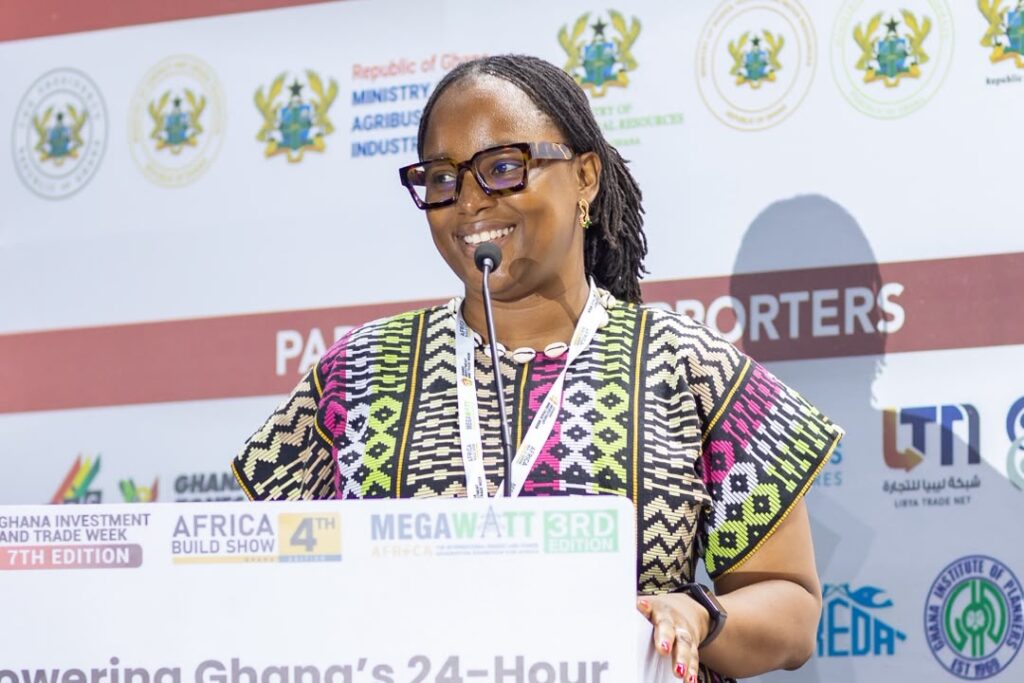
As Regional Ambassador for Startup World Cup, she represents the global pitch series at competitions across West Africa and judges at regional finals. She is also Coordinating Ambassador for One Young World in West and Central Africa.
She has spoken on community as a strategy for business growth, AI for SMEs, the future of creative work and business plan development. She has facilitated the HerLibrary No-Code Tech Accelerator for stay-at-home mothers and served as a judge and chief judge at entrepreneurship and pitch competitions.
Her academic training has also evolved alongside her work. She holds a Postgraduate Diploma in Marketing from the Chartered Institute of Marketing in the UK and studied Entrepreneurship in Emerging Economies at Harvard University, alongside certifications in Product-Led Growth and Product and Growth Strategy.
But the deeper story is not in the qualifications.
It is in the accumulation of experiences and the way she has chosen to use them.
Machi taught her what it means to build when the outcome is uncertain. Orange Corners gave her the experience of being supported as a founder. The career break gave her the opportunity to reassess. Shecluded introduced her to the work of building entrepreneurship programmes. ALX gave her the challenge of doing that across markets and at scale.
None of those experiences sits in isolation.
They explain the woman doing the work today.
There is a carefulness in the way Belinda approaches entrepreneurship development that makes more sense when you understand the journey that brought her here. She has seen what happens when a founder has an idea but not enough support around it. She has experienced the value of being given access at the right time. She has built programmes and watched entrepreneurs move through them. She has had to step away, rethink and find her way back.
So when she talks about programmes that move founders from stuck to funded, she is not speaking about entrepreneurship from a distance.
She understands the distance that has to be travelled.
And that may be the real value of her experience.
Belinda does not simply collect the lessons from each chapter of her career. She carries them into the next one.
The founder became the programme architect.
The beneficiary became the person designing the experience.
The career break became part of the sharpening.
And the woman who once needed opportunities for her own business now spends much of her time thinking about how to create better opportunities for other entrepreneurs.
There is a certain kind of confidence that comes from having seen the same problem from almost every possible angle.
Belinda has lived that journey.
She has been the founder trying to make an idea work, the entrepreneur hoping someone would open the right door, and eventually the person building the doors and pathways through which other founders can move.
Perhaps that is why the work she does today feels so deliberate.
She knows what it is like to stand on the other side.
And she knows that sometimes, what changes a founder’s trajectory is not another piece of advice, but having the right pathway, at the right time, with the right support around them.
That is what Belinda is building now.
Better pathways for African entrepreneurs.
And if you look closely enough at everything that came before, you can see why.