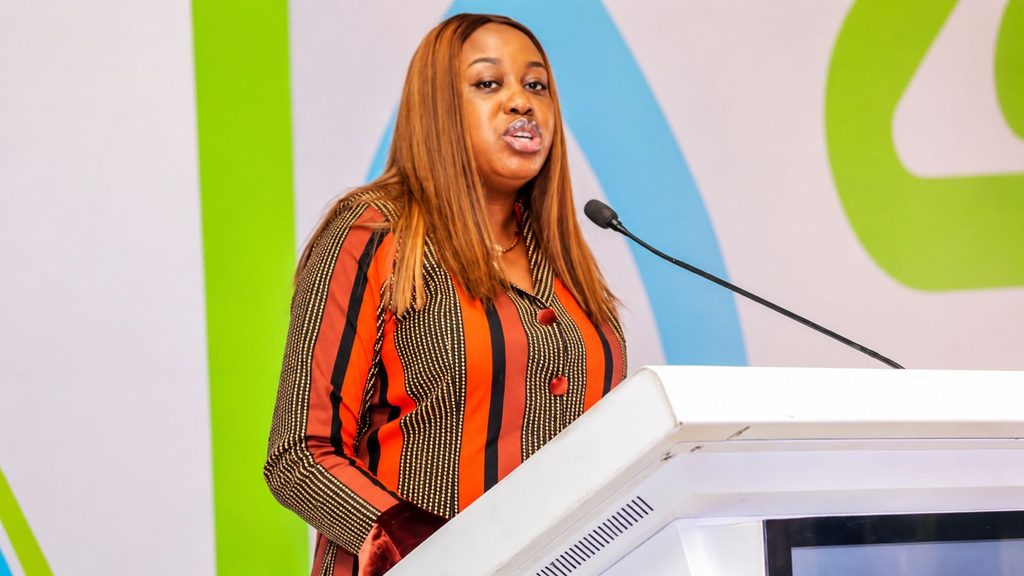
Joy Aderele: The Many Chapters of a Life Built Around Service
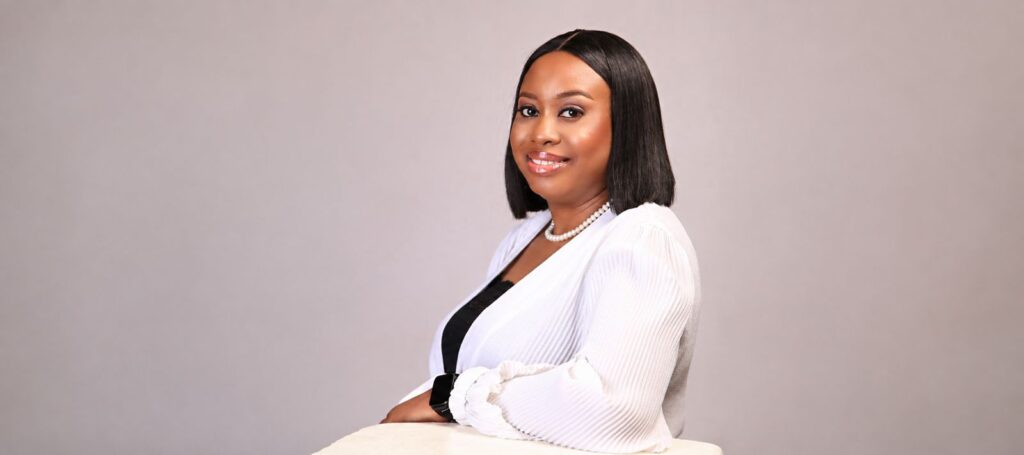
There is a particular kind of person who cannot see something wrong and simply walk away. Joy Aderele seems to be one of them.
Years ago, she saw a young girl at a bank. The girl looked about 14 or 16. She was carrying a baby and begging for money. Joy went home, but she could not shake the image. The sight stayed with her so much that she could not sleep that night.
So she began thinking about what could be done.
Eventually, she wrote a proposal to support married adolescent girls with vocational skills in Northern Nigeria.
It is only one moment in a career that has now spanned more than two decades, but it says something about Joy that a list of qualifications never could. She sees something that is wrong, and she wants to understand what can be done about it.
Perhaps that instinct was formed much earlier.
Joy was the youngest of six children, growing up with five girls and one boy. In a home surrounded by girls, she saw the expectations placed on them, the responsibilities they carried and the realities that came with growing up female. She has spoken about how those experiences influenced her passion for gender advocacy.
By the time she got to the university, that awareness was already becoming action. She led an HIV outreach programme and became involved in gender advocacy and school outreaches, including facilitating sessions on life building skills.
Looking back, the themes were already there: girls, women, health, communities, advocacy and service.
She did not yet have the language of systems strengthening or institutional development. She was simply a young woman who cared enough to get involved.
Her early professional years took her through behaviour change communication, youth development, community mobilisation, partnerships and programme implementation. She was learning what it meant to take an idea beyond paper and into people’s lives.
At Mercy Corps, that experience grew into leadership. Joy took on several roles across programmes focused on girls’ education, women and youth empowerment, livelihoods, peace and security, gender and social inclusion. One of the defining chapters was ENGINE, where she provided strategic and technical leadership across 209 communities and 108 schools, reaching more than 21,000 marginalised girls.
But the numbers do not tell the whole story.
Joy had already learnt that keeping a girl in school is rarely just about school. There is the family, money, responsibilities at home, social expectations, health and the question of whether that girl can actually imagine a different future for herself.
So the work had to look beyond the classroom.
Her work on the ECOSAT project, also with Mercy Corps, extended that thinking into the economic lives of marginalised young people, focusing on financial education, savings groups and economic opportunities.
With each role, the picture became wider.
And while her professional career was growing, Joy’s work with women and girls was also taking other forms.
She founded the African Girls’ Assembly, a girl-focused empowerment and leadership platform that equips adolescent girls with knowledge, confidence, and practical skills to strengthen their personal development and leadership potential.
There was also Joy the author.
Girls Talk: A Mentorship Guide for the 21st-Century African Girl gave her another way to speak to the young girls who had remained such a consistent part of her work.
And then there is Joy in the Morning, which offers a more personal window into her faith, hope and resilience.
These are not side notes to her professional life. They help us understand the woman doing the work. The woman who has spent years thinking about how girls and women can find their voices, build their capacity and navigate difficult seasons has also found different ways to put those convictions into words, spaces and action.
Her career, meanwhile, continued to expand.
At the World Bank, as Senior Technical Advisor on the Nigeria for Women Project, Joy supported the Federal Government of Nigeria on a major women’s economic empowerment programme that reached hundreds of thousands of women across six states.
The vantage point was different.
After years of working close to communities and programmes, she was now seeing more clearly the machinery behind development: policy, budgets, implementation structures, accountability, government coordination and institutional capacity.
The questions were getting bigger.
It was no longer only about responding to a need in a community. It was about understanding the systems around that need and what would have to change for the solution to last.
By November 2022, Joy became Country Director of Self Help Africa in Nigeria.
By then, she had already spent years learning how programmes work, how communities respond, how partnerships are built, how teams are led and how government systems shape what happens on the ground.
Today, she leads a multidisciplinary team of more than 50 people and oversees a portfolio spanning women’s empowerment, WASH, livelihoods, food security and climate change.
Her current work reflects that broader view.
Through Self Help Africa’s WASH Systems for Health programme, more than 320,000 people gained improved or restored access to safe water services across Cross River and Kano States. But the work also focuses on governance, planning, financing, accountability and strengthening the institutions responsible for keeping those services running.
Because providing a service is one thing. Making sure the system can keep providing it is another.
And perhaps that is one of the clearest ways to understand how Joy’s career has evolved. The young woman who once saw a girl at a bank and asked what could be done is now working at a level where the questions include what can be built, what can be strengthened and what can remain after the programme ends.
That is what more than 20 years in development can give you. Experience, certainly. But also perspective.
You begin to see that the girl who is out of school may be connected to a much bigger story. That the young person without an income may need more than a skill. That the woman without economic power may also be navigating systems that were never designed with her in mind.
And perhaps that is why, when you look back at Joy’s journey, the title of Country Director is only one part of the picture.
You have to go back a little.
Back to the girl who grew up surrounded by sisters. The university student leading an HIV outreach. The young advocate speaking about gender and life building skills. The development practitioner working across reproductive health, education, agriculture and livelihoods. The founder of African Girls’ Assembly, the largest leadership platform for girls in Africa. The author writing to girls and young people. The woman writing about faith and hope. The programme leader at Mercy Corps. The advisor at the World Bank. And now, the Country Director of Self Help Africa.
Each part tells us something about the woman she has become.
And perhaps that is what makes her story worth telling.
Because if you meet Joy today only by her title, you see a senior development leader.
But when you look behind the title, you see years of work, questions, relationships, lessons and people who have shaped the journey.
You see a woman who has spent much of her life creating opportunities for other people while continuing to learn, lead and grow herself.
Joy once described what drives her very simply: “Compassion; I hate to see people suffer, so I always want to make things better.”
Maybe that is the thread running through all of it.
Not the titles. Not the organisations. Not even the programmes.
Just the inability to see something wrong and decide that it is not her concern.
More than two decades later, the rooms are bigger. The responsibilities are bigger. The questions are bigger.
But the instinct remains.
She sees something that needs to be better.
And she still asks, what can be done?