Daisi Omokungbe Is Using Technology to Give Citizens a Bigger Voice in How Nigeria Is Governed
For Daisi Omokungbe, civic participation is not simply about asking citizens to speak up. It is also about giving them the tools, information and systems to understand what is happening in their communities and engage with the institutions responsible for delivering public services.
That idea sits at the centre of PROMAD Infotech Foundation, the civic innovation nonprofit he founded. Now, the organisation is entering a new phase with a five-year strategy aimed at expanding its use of technology, data and artificial intelligence to strengthen citizen participation and accountability across Nigeria and, eventually, other African countries.
PROMAD’s 2026–2030 strategy builds on tools the organisation has already developed, including FollowTheProjects and Isunawa AI, also known as “Our Budget.” The organisation plans to scale participatory budgeting and public project tracking to between 10 and 15 Nigerian states.
The idea behind the platforms is relatively simple: make information about public projects and budgets easier for citizens to access and use, while creating channels through which communities can communicate their needs and track what happens after decisions are made.
FollowTheProjects is designed to help citizens monitor projects and assess their implementation, while Isunawa AI is being used to make budget information more accessible and support citizens in understanding public spending. PROMAD says the platforms will form part of a wider digital governance ecosystem that includes interactive dashboards and tools for citizen engagement.
But Omokungbe’s vision extends beyond software.
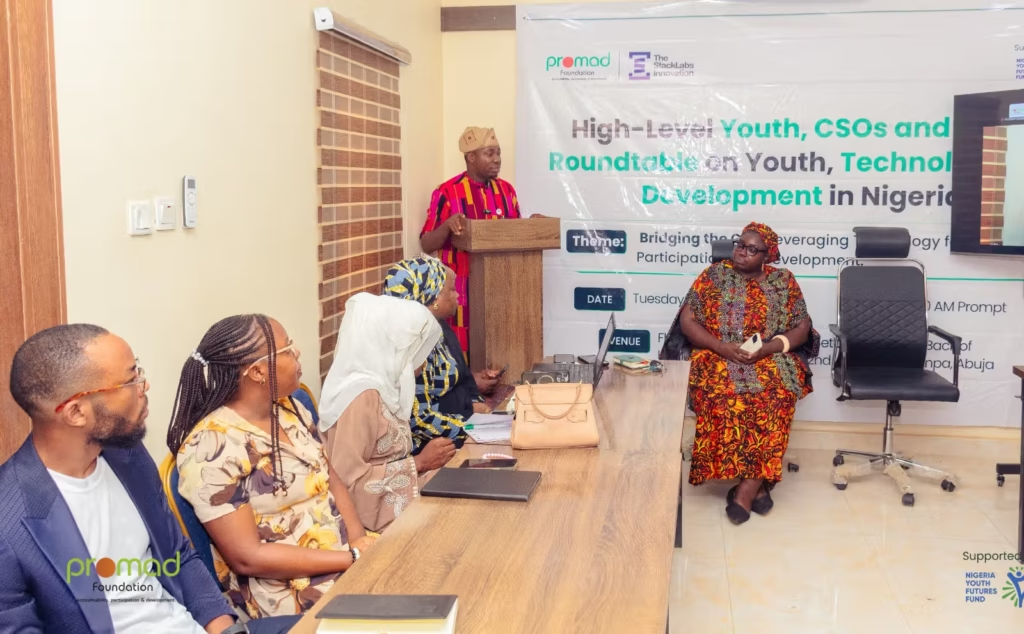
PROMAD’s strategy includes hybrid citizens’ town halls, fellowships and community-led needs assessments designed to create more direct channels between communities and decision-makers. The organisation also plans to train young people, women, persons with disabilities, civil society organisations and subnational officials in areas including social accountability, digital skills, AI and data literacy, policy advocacy and organisational development.
This combination of technology and community engagement reflects how Omokungbe has approached civic innovation over the years. PROMAD previously worked with young people across the six area councils of the Federal Capital Territory on civic participation, community needs assessments and project tracking, using its Grassroots Advocacy Project platform to gather information from communities.
The organisation was founded around the idea of narrowing the gap between citizens, grassroots communities and government. Its work sits at the intersection of civic education, technology, data and policy advocacy, with the aim of helping communities participate more meaningfully in decisions that affect them.
That approach has also led Omokungbe to argue that civic technology should not be understood simply as building another app. In an earlier discussion on youth participation and technology, he described civic tech as a way of using digital tools to improve transparency, accountability, engagement and access to information.
The new strategy places particular emphasis on groups that can be underrepresented in formal decision-making, including young people, women and persons with disabilities. PROMAD says it wants these groups to have greater opportunities to contribute to development priorities in areas such as education, healthcare, infrastructure, climate and leadership.
The organisation also intends to expand beyond Nigeria by 2030, taking its civic technology solutions and participatory governance models into other African countries.
For Omokungbe, the longer-term challenge is therefore not simply getting more people online. It is building systems that allow citizens to turn information into participation and participation into influence over the issues affecting their communities.
PROMAD’s next five years will test how far that model can travel — from digital platforms and community meetings in Nigeria to a broader African civic technology ecosystem where citizens have more practical ways to understand public decisions, contribute to them and monitor what follows.
The bigger story is the emergence of a new kind of nonprofit founder: one using technology not primarily to sell a product, but to build infrastructure for participation, accountability and community-led development.