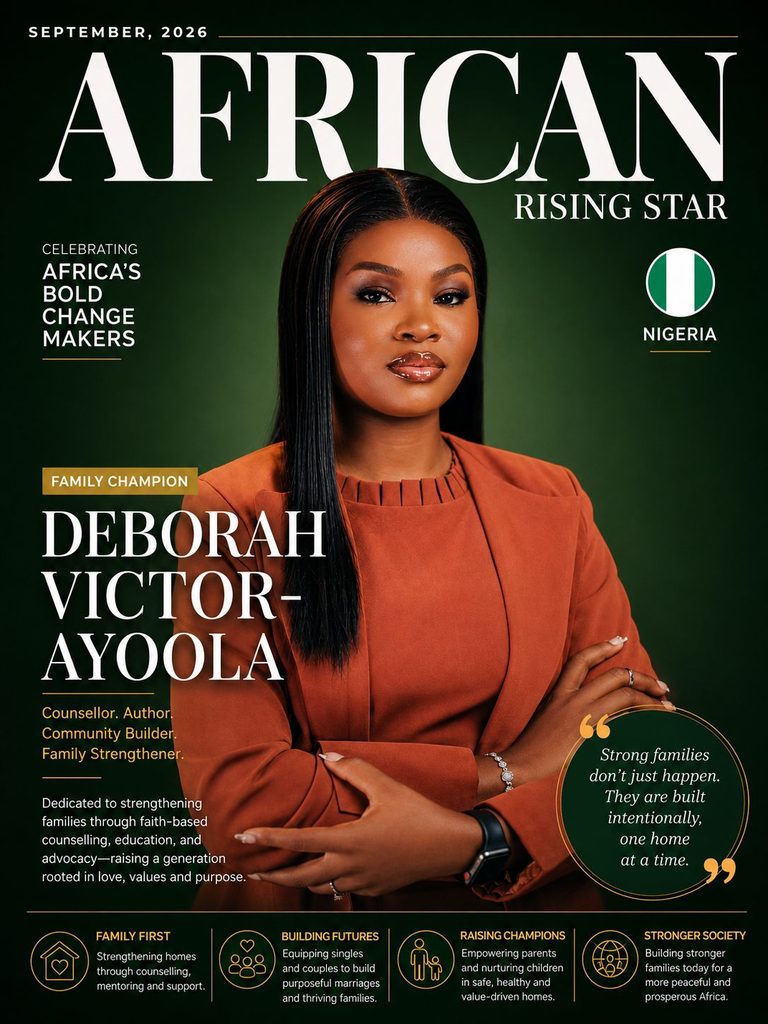
Deborah Victor-Ayoola: Rebuilding Families, One Home at a Time
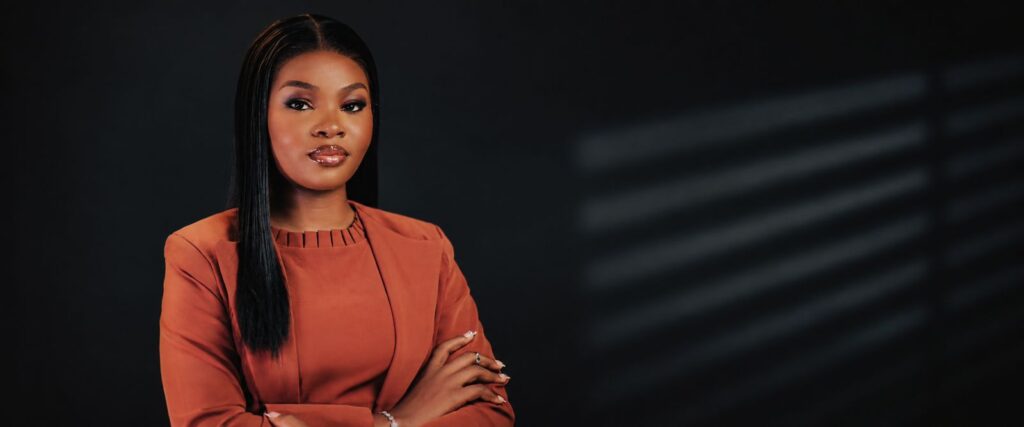
Some people’s work tells you what they care about. But sometimes, when you look a little closer, you begin to understand why they care about it so much. That is what I find interesting about Deborah Victor-Ayoola. Today, it is easy to describe her through the work she does. She is a certified marriage and family life counsellor, co-founder of FAMCORE Solutions, founder of The Godly Marriage Tribe and author of Courtship Compass, a practical guide with more than 150 questions for singles who want to be more intentional about choosing a life partner. She is also a wife, a conference host, a community builder and a woman who has deliberately created spaces for conversations about relationships, marriage and family life. But if you stop at the titles, you miss the more interesting part of her story.
Long before Deborah began counselling people about marriage, she was a young woman figuring out life for herself. Her years at the University of Ilorin came with the experiences that often shape us in ways we only understand much later: relationships, mentorship, family experiences, difficult decisions and the gradual transition into adulthood. She has spoken about a four-year relationship that eventually ended and about some of the lessons that came from navigating relationships as a young woman. Those experiences matter because they give another dimension to the woman doing this work today. Deborah did not arrive at conversations about relationships simply because she found the subject interesting. She has had her own seasons of learning, disappointment, growth and becoming, and somewhere along the way, questions about relationships became questions about something much bigger: what makes a family strong, and what can we do before families begin to break down?
That question seems to sit underneath much of what she is building. Through FAMCORE Solutions, Deborah works to strengthen families through faith-based counselling, strategic education and advocacy. Through The Godly Marriage Tribe, she has created a community for singles who are preparing for marriage, while Courtship Compass gives them practical questions to help them think more carefully about the person they may eventually build a life with. Her work through Rooted Before Rings takes the same philosophy into deeper conversations, encouraging people to address subjects such as emotional wounds, money, communication, boundaries, in-laws, purpose and spiritual maturity before these issues become sources of tension inside a home.
But what stands out to me is that Deborah is not simply interested in getting people to the altar. She is interested in what the altar produces.
What kind of home will these two people build?
What will their children experience?
How will they communicate when they disagree?
Will they know how to apologise?
Will they understand how to handle money, boundaries and family expectations? Will they bring unresolved wounds into the home and unknowingly pass them on? These questions may not be as exciting as wedding planning, but they are the questions that eventually determine what life inside that home feels like. Deborah’s work is therefore less about romanticising marriage and more about helping people understand the responsibility that comes with building a family.
That is also why her challenge to the casual “if it doesn’t work, I’ll just get a divorce” mindset is worth paying attention to. Deborah has encouraged singles to approach marriage with greater seriousness, not by pretending that every marriage will be perfect, but by recognising that preparation matters. She talks about understanding your values, learning how to communicate and resolve conflict, seeking wisdom from couples who are doing marriage well, and paying attention to a person’s actions rather than simply their words. There is something refreshing about that approach because she is not making marriage sound frightening. She is making people respect it.
There is, however, another layer to Deborah’s story that makes the family conversation even more personal. She gets to do ministry with her husband. Together, they co-host the annual Kingdom Marriage Conference, creating a space for people to learn and have honest conversations about marriage through their shared Christian faith. There is something beautiful about that connection between the work and the life. Deborah is not simply standing outside the family institution telling other people how it should work. She is a wife building her own home, serving alongside her husband and using what they are learning and experiencing to create space for others. The message and the messenger are not completely separate.
And yet, even marriage is not the full extent of Deborah’s concern. The more you look at her work, the more you see someone interested in the environments that shape people long before they become husbands, wives or parents. Her volunteering with Beyond the Classroom Foundation is another part of that story. Since 2022, she has been involved in work around child welfare, education, hygiene and safety, including engaging parents and guardians and supporting efforts that help children grow in safer and more supportive environments. At first glance, that may seem like a different lane from marriage and family counselling. But when you understand Deborah’s larger interest, the connection becomes clear.
She is looking at the family from different points of entry: the person preparing to build one, the couple already building one, the parent raising children inside one and the child whose earliest understanding of relationships is being formed there.
That is what makes her vision of family particularly interesting. Deborah is not treating the family as a private subject that has nothing to do with the wider society. She has spoken about strengthening nations through the family system, one home at a time, and about strong families being a public necessity for Africa’s future. It is a big idea, but it becomes much less abstract when you think about how much of human development actually begins at home. Children learn how adults treat one another at home. They learn how conflict is handled. They learn whether it is safe to make mistakes. They learn whether apologies are possible. They learn what responsibility looks like. They learn what love looks like. And eventually, they take those lessons into friendships, schools, workplaces, marriages, communities and leadership.
Perhaps that is why some of Deborah’s most important ideas are also the simplest. In one of her reflections on family leadership, she spoke about the importance of adults being able to apologise sincerely to children. On the surface, it is just an apology. But underneath it are lessons about accountability, humility, trust and repair. The same is true of the conversations she encourages couples and singles to have. A difficult conversation about money may prevent years of resentment. A conversation about boundaries may prevent future conflict. Someone recognising an unhealthy pattern before entering a relationship may change the kind of home they eventually build. A parent learning to communicate differently may change what a child carries into adulthood. These things can look small when viewed individually, but families are built through thousands of these seemingly ordinary moments.
And this is where Deborah’s work begins to look less like a collection of programmes and more like a philosophy. She seems to believe that healthier families are not created by accident. They require people who are willing to learn, unlearn, communicate, heal, take responsibility and make intentional choices. They require parents who understand that children are watching. They require couples who understand that love does not remove the need for wisdom. They require individuals who are willing to examine themselves before blaming everyone around them. And they require communities that are willing to talk about family life before there is a crisis.
For a woman whose public work is often introduced through marriage, I think that is an important distinction. Deborah’s story is not really about marriage. It is about family. Marriage is one part of the journey, but her larger concern is what happens when people come together, create homes, raise children and influence the people around them. It is about the emotional, spiritual and relational health of those homes and what that health eventually contributes to the wider society.
That may also explain why her work with singles is so important. She is not simply telling people to find a good husband or wife. She is asking them to become more self-aware before making that choice. To understand their values. To confront what needs healing. To ask questions they might rather avoid. To pay attention to character. To recognise that the person they choose will not only become their spouse but will become part of the environment in which future children may grow. The decision is personal, but its consequences can extend far beyond the two people making it.
When you put all these pieces together, Deborah Victor-Ayoola becomes much easier to understand. The counsellor, the author, the community builder, the wife, the volunteer and the woman creating difficult but necessary conversations are not separate versions of her. They are different expressions of the same conviction: that the family matters, and that we should be much more intentional about building it.
It is a quiet kind of nation-building. There may be no ribbon-cutting ceremony when a couple learns how to communicate better. There may be no headline when a parent chooses to apologise to a child. Nobody may celebrate when a young woman recognises an unhealthy pattern and decides not to carry it into her future home. But these decisions accumulate. They shape children. Children become adults. Adults build relationships. Relationships become families. Families shape communities. And communities eventually become the societies we inherit and the ones we leave behind.
So perhaps the most fitting way to understand Deborah’s work is not simply as a campaign for better marriages, but as an investment in the places where people are formed. She is working with singles before they choose, couples while they build, parents as they raise children and communities as they think about what healthy family life should look like. She is asking people to take seriously the things that happen behind closed doors because she understands that what happens inside those doors does not always stay there.
Eventually, it walks into the world.
And that may be the most powerful thing about Deborah Victor-Ayoola’s story. She has chosen to work on something we all belong to in one way or another. Whether we are children who were raised in a family, adults trying to understand the families we came from, singles preparing to build one, couples already raising one or parents wondering what our children are learning from us, the family touches all of us.
Deborah’s contribution is to remind us that because family shapes so much of who we become, building stronger families is not a small assignment.
It is part of building the society we hope to see.
One person. One relationship. One family. One home at a time.