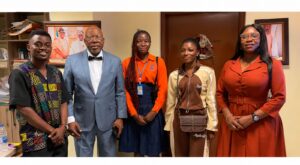
Katsina Adopts Safe Schools Policy to Protect Learners and Teachers

The Katsina State Government has officially domesticated the National Safe Schools Policy as part of efforts to strengthen the safety and protection of students, teachers, and learning environments across the state.
Governor Dikko Radda announced this during the official launch of the policy in Katsina, describing the move as a major step toward addressing growing security concerns affecting education, especially in vulnerable and rural communities.
According to the governor, the policy was adapted from the 2021 national framework and tailored to reflect the realities and security challenges facing schools within the state.
He explained that the framework focuses on prevention, emergency preparedness, early warning systems, psychosocial support, and stronger response mechanisms for schools affected by insecurity and violence.
“This policy is about ensuring that schools remain safe spaces for learning. Education can only thrive when children and teachers feel protected,” he said.
Radda added that the policy integrates school safety into planning, budgeting, implementation, and accountability structures at community, local government, and state levels.
He also reaffirmed the state government’s commitment to investing in safer school infrastructure and strengthening protection systems within educational institutions.
The governor commended development partners and members of the state steering committee for supporting the domestication process, particularly Save the Children International, which supported the initiative through the Education Cannot Wait project funded by the Government of Japan.
Speaking during the event, Deputy Country Representative of Save the Children International, Jane Mbagi, described the policy as an important milestone toward protecting children’s right to safe and uninterrupted learning.
She noted that the organisation has worked in Katsina State for nearly 15 years across education, child protection, nutrition, and healthcare interventions.
According to her, over 122,000 children were supported through formal and non-formal education programmes in 2025, including children with special needs.
She also praised the Katsina State Children’s Parliament for consistently advocating for safer schools and stronger child participation in governance processes.
The Children’s Parliament had repeatedly called for the domestication of the safe schools policy and budgetary support for child-focused initiatives within the state.
Speaking on behalf of the parliament, Saudat Akilu highlighted the impact insecurity had on education, recalling periods when many children could not attend school due to fear and violence.
She said children in affected communities were forced to live with uncertainty and disruption instead of focusing on learning and personal growth.
Stakeholders at the event emphasised that the success of the policy would depend on effective implementation, sustained funding, and strong collaboration between government agencies, communities, schools, parents, and development partners.
The initiative forms part of broader national efforts to ensure schools across Nigeria remain safe, inclusive, and conducive environments for teaching and learning.