Breaking the Silence Around Menstruation: Organizations in Nigeria Mark World Menstrual Hygiene Day 2026
For many girls in Nigeria, the first experience of menstruation does not begin with education or support. It often begins with fear, confusion, secrecy, or shame.
Even in 2026, conversations around periods remain uncomfortable in many homes, schools, and communities. Many girls still grow up without proper menstrual health education, while others miss school during their periods because they lack access to sanitary products or safe facilities.
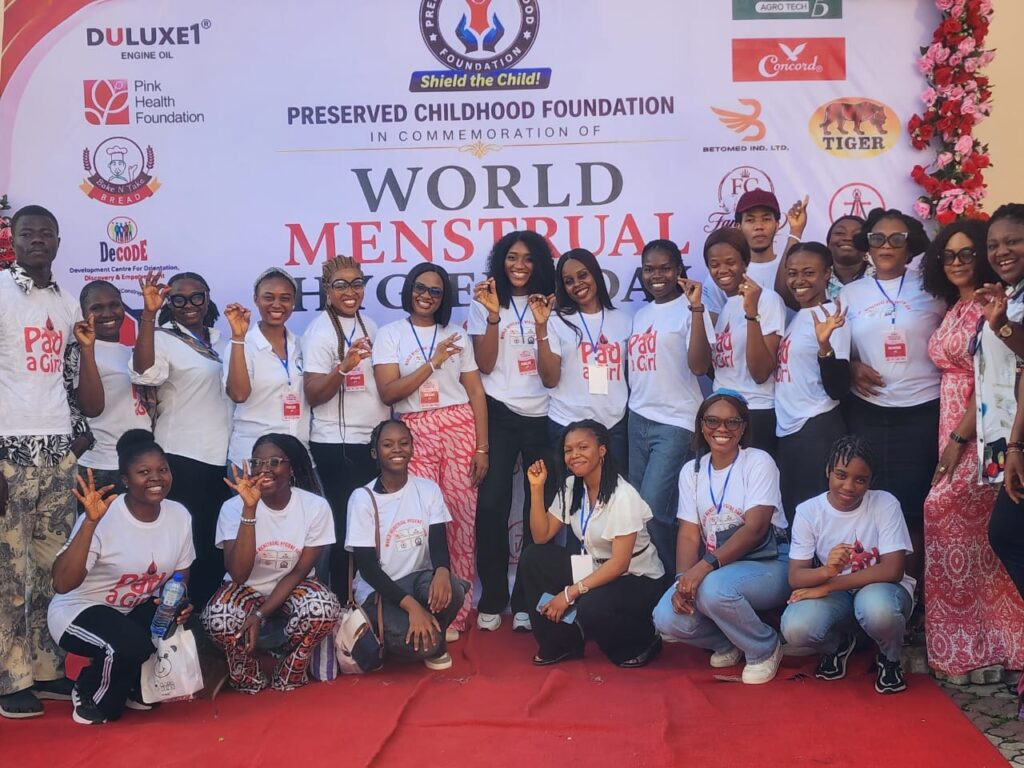
To challenge that reality, DeCODE (Development Centre for Orientation, Discovery & Empowerment), alongside Preserved Childhood Foundation and Pink Health Foundation, marked World Menstrual Hygiene Day 2026 with a large community event in Onitsha focused on menstrual health awareness, dignity, inclusion, and confidence for girls.
Rather than treating menstruation as a private issue girls should quietly endure, the event created a safe and open space for honest conversations around puberty, menstrual hygiene, body safety, stigma, and the social pressures many girls experience during adolescence.
Students, teachers, healthcare professionals, advocates, parents, and community stakeholders gathered to discuss how silence and misinformation continue to shape the experiences of girls across many communities.
Throughout the event, facilitators spoke about practical menstrual hygiene, understanding the menstrual cycle, period preparedness, and the importance of access to Water, Sanitation and Hygiene (WASH) facilities in schools.
But beyond hygiene, the conversations also focused on confidence and dignity.
One of the strongest moments of the event came during a student debate titled:
“Should Menstruation Be Discussed Openly or Not?”
The discussion reflected the reality many girls still face. Some students argued that conversations around menstruation remain culturally sensitive and uncomfortable, especially in mixed spaces. Others challenged that thinking, insisting that periods should be discussed openly because silence only increases shame, stigma, and misinformation.
Several students also emphasized that boys and men should not be excluded from menstrual health conversations if communities truly want to create supportive environments for girls.
Another memorable highlight was a mime performance by students from the School for the Deaf, reminding participants that menstrual health awareness must be inclusive and accessible to girls living with disabilities as well.
The event also introduced PeriodReal, a digital platform designed to provide girls with trusted menstrual health information, support, and learning resources in a safe and accessible way.
Hon. Mimi Okpeazu, Member representing Onitsha Constituency 1, encouraged girls at the event to remain confident in themselves, focus on their future, and refuse to allow societal expectations define their worth or potential.
Women professionals who participated in a panel session also shared personal experiences about growing up, navigating womanhood, building careers, and overcoming challenges, creating moments many of the students deeply connected with.
The organizers stressed that menstrual health conversations must go beyond annual awareness campaigns and become part of everyday conversations in schools, homes, and communities.
Because for many girls, access to menstrual health education is not just about periods. It is about confidence, participation, dignity, and the ability to fully show up in life without shame.